Anim pariatur cliche reprehenderit, enim eiusmod high life accusamus terry richardson ad squid. 3 wolf moon officia aute, non cupidatat skateboard dolor brunch. Food truck quinoa nesciunt laborum eiusmod. Brunch 3 wolf moon tempor, sunt aliqua put a bird on it squid single-origin coffee nulla assumenda shoreditch et. Nihil anim keffiyeh helvetica, craft beer labore wes anderson cred nesciunt sapiente ea proident. Ad vegan excepteur butcher vice lomo. Leggings occaecat craft beer farm-to-table, raw denim aesthetic synth nesciunt you probably haven't heard of them accusamus labore sustainable VHS.
Salt lakes on Mars? Possible
Washington
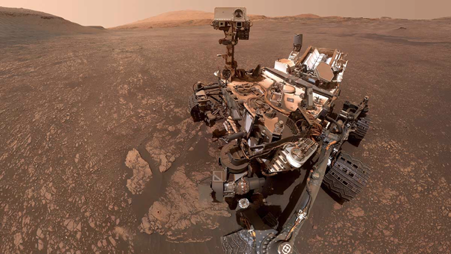
NASA’s Curiosity rover has discovered sediments rich in salt in Mars’ Gale Crater. This shows that the Red Planet once contained salt lakes which dried up as the planet went through prehistoric climate change. Curiosity has occupied this crater and studied it for seven years.
The finding supports the theory that Mars became arid and dry after the crater was formed, approximately 3.5 billion years ago.
The findings have implications for understanding how Mars evolved and became the dry and cold planet it is today, as well as its past habitability, as salt water bodies on Earth support abundant forms of life.
The salts found in the 150m-tall rock formation were calcium sulphate and magnesium sulphate.
The researchers concluded that the salt was probably deposited along the edges of the crater’s basin, where the water was shallow, and via streams that ran along the crater walls. They also speculate that the deposits might have come from multiple ponds in the crater.
Fun fact
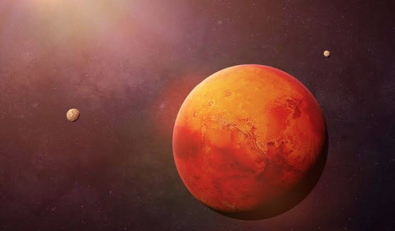
Mars is home to the tallest mountain in the solar system. Olympus Mons, a shield volcano, is 21km high and 600km in diameter. Despite having formed over billions of years ago, evidence from volcanic lava flows is so recent many scientists believe it could still be active.
NASA’s Curiosity rover
NASA’s Curiosity rover has discovered sediments rich in salt in Mars’ Gale Crater. This shows that the Red Planet once contained salt lakes which dried up as the planet went through prehistoric climate change. Curiosity has occupied this crater and studied it for seven years.
The finding supports the theory that Mars became arid and dry after the crater was formed, approximately 3.5 billion years ago.
The findings have implications for understanding how Mars evolved and became the dry and cold planet it is today, as well as its past habitability, as salt water bodies on Earth support abundant forms of life.
The salts found in the 150m-tall rock formation were calcium sulphate and magnesium sulphate.
The researchers concluded that the salt was probably deposited along the edges of the crater’s basin, where the water was shallow, and via streams that ran along the crater walls. They also speculate that the deposits might have come from multiple ponds in the crater.
NASA’s Curiosity rover
Fun fact
Mars is home to the tallest mountain in the solar system. Olympus Mons, a shield volcano, is 21km high and 600km in diameter. Despite having formed over billions of years ago, evidence from volcanic lava flows is so recent many scientists believe it could still be active.